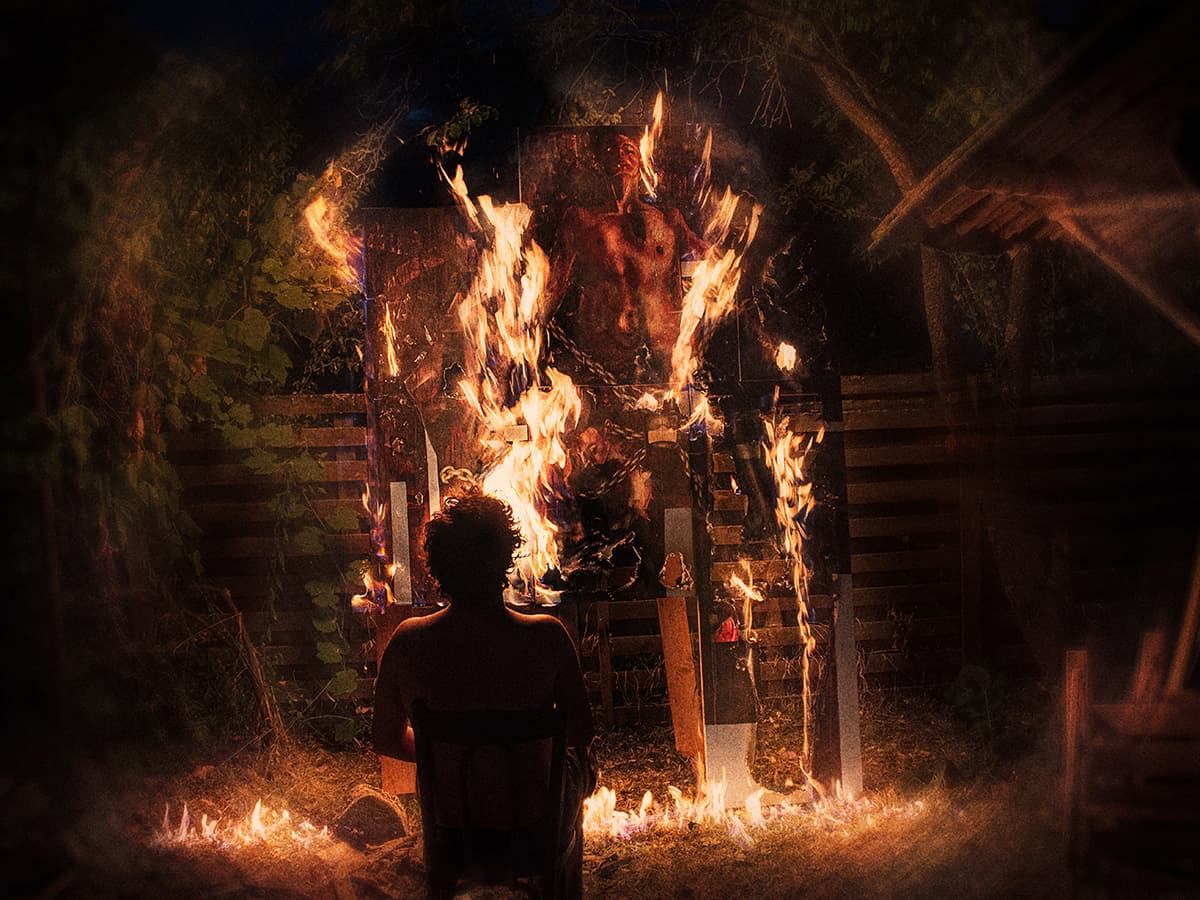
David Eșanu (1997) is a photographer, videographer, painter, free spirit, nature lover, currently based in Cluj-Napoca, Romania. He is a co-founder of Nophto Photo Magazine, freelancer and entrepreneur in digital media creation. His ambition has always been to deepen and propagate the assessment of social roles and their perception, focusing on stretching the domain of art through different projects and metaphorically getting naked in front of the camera. Always on the move, always stretching his time between video productions, editing, photography, advertising work, or stunts and personal creation time. Where else to make an interview with David Eșanu if not on the move, on the București-Pitești Highway, after an art exhibition visiting marathon.
Interview by Mira Marincaș
12.01.2026
M.M.: Hi. Why do you take photographs?
D.E.: The simplest answer is because I have to.
M.M.: To come back to this point, the concept that you have to. Survival is what you have to do: calories, oxygen, sleep, and shelter. In today's world, what motivates the artist in you? Is art still necessary?
D.E.: For me, it's a necessity, on the same level as everything else, because it's a tool for expressing a small part of, I don't even know what to call it, everything. The colors, the curls, the connections, and everything that has ever rolled out of and into my mind. So that's the answer: that's why I do photography, among other things: it's a medium through which I can express myself. But that's just the beginning, or the seemingly childish and selfish motivation that I have to express myself. Going deeper, yes, absolutely yes, art is necessary. Art has been at the forefront of humanity since before we organized ourselves into civilizations. Art is a means of understanding and processing everything that cannot be said through other forms. It is a way of communicating. Art is the answer to certain fundamental problems of the human condition. And today, with so much meaningless background noise, it is, in my view, more important than ever. So yes, I create because I need to and because it is necessary.
M.M.: Who was your first artistic/photographic role model? What are the underlying reasons for this imperative to create art?
D.E.: The foundation was built on stories about my grandfather, who was a photojournalist. For me, ever since I was a small child, he has been an archetypal figure, and I would even dare to say a mystical one. I gathered fragments from the many family stories because he passed away before I was born, before I got to know him. My first memory is from very early on, when I went with my grandmother to the cemetery. She told me we were going to see Grandpa Ionel, and once we got there, I asked her, "Where is he?" and she explained that he was in heaven and everywhere. It took me a while to fully understand what that meant, but I remember that from an early age I had many discussions with my grandmother about life and death, the unseen, and many other topics in the same semantic field.
In any case, returning to the narrative thread, the multiple stories about my grandfather, which somehow shaped an image, a character, now slightly idealized in retrospect, combined with the archive of black-and-white photos at home that I often looked through when I was little, had a strong influence on my subconscious in choosing this path in life, because when you are little you assimilate a lot, very quickly, and patterns are created that work and guide you into adulthood. In addition, when I was little, drawing was one of the only times I would sit still, so it became an encouraged habit, especially since those who took care of me were very happy to take a break from watching me, although this break sometimes came with some... costs... now I would label them funny for me. I will bring to light two memories that are very precious to me: I was with my grandmother in Zalău, I don't remember exactly how old I was, and she left me alone for a while (I was drawing) to go to the store. Well, David - Mitruț at the time - got bored of drawing and wanted to explore more; I took a hammer from the pantry, went out on the balcony, and started breaking the wall, making a deep and long streak of about a meter; then Mitruț said, we need some color, so I took the meat grinder and the colored chalk I used to go outside and ground it, then mixed it with water; that's how I made my own paints, which I threw all over the wall in the fever of creative activity; and I remember very clearly how she didn't scold me at all (and how could she scold me, after all, it wasn't my fault in any way that I had given free rein to my imagination); what's more, when she painted the apartment, she specifically asked that that area not be repaired and covered, and it remained preserved for many, many years.
My second cherished memory is from a Saturday when my mother had to go to work - she was working at Cluj City Hall at the time - and she took me with her. She left me alone in the deputy mayor's office, which I remember as being a massive, black office, to draw. Of course, I quickly got bored with the constraints of the sheet of paper, so I took the correction fluid and started to embellish the entire huge office with white, much to my mother's delight when she found my handiwork and had to spend the rest of the day scratching the white paste off the desk with her fingernails. Yes... these are two memories that describe me very well, even today: creative, expansive, and with a very slight and not at all obvious tendency to step out of line. Photography itself, or at least in a more serious way, because I really liked taking pictures since I was little, whenever I found something to photograph, came later, in high school, when I got my first DSLR, although it was a gift so I could take good pictures of my work (I was studying painting in high school). It also became a way of expressing myself, then a business and commercial image, a way of making friends, connecting with other people, and simply admiring the life around me. David back then would surely have said that I was the greatest artist in the world, and that was pretty much how I projected myself to the outside world. Now I laugh at myself, but I was quite obnoxious (to put it mildly) at times back then. Cute, self-confidence and arrogance at times, somehow... what I'm pursuing or what I was pursuing back then, I don't know...
Anyway, these are pretty much the main pillars of this must do, and there would be a lot more to tell, but we'll save that for other occasions.
M.M.: Are you familiar with the conflict between what you want to express and what is expected of you professionally? Art vs. business?
D.E.: Yes, I am very familiar with it. I did the commercial part because you need a business, and there I was always in conflict because the artist/child in me was always looking for something more than enough: that angle, that frame, that light. Let's do it! Let's try it! Let's make it different, let's do it better, and so on. I always wanted to play, and that's what I want to do today, to play, because playing leads to interesting and true things. Now, there is also something that has to do with maturity and understanding, and with experience, you learn where it is necessary to search and invest and play, you learn where a clear recipe and a predictable result are needed, and you learn to separate things and allocate your time and energy accordingly.
M.M.: Could we say something truly authentic and emotional for you?
D.E.: I have always been extremely emotionally sensitive. It took me a long time to learn and accept that everyone has their own reality, or rather, their own perception of reality, to be fair. Once I integrated and implemented this idea, things improved considerably in all aspects of my life. Authentic emotional things for me on an artistic level, hm, could be an extraordinary landscape, which either marked me by itself, or it was me at a certain moment and I projected a certain symbolism onto it. Or loved ones, close ones, for example, I always followed the couple's relationship through photography. Photographing our space, the one shared between me and her, playing, exploring ourselves, taking on masks, discovering others. It may sound a bit superficial as a theme, although at the acute moment of the present at that time, there was nothing superficial about it, it's just that I didn't know all the underlying layers. It may seem like play on the surface, but it wasn't, and although at that time I had a tendency to project certain things without stopping to observe and understand... it was still a valuable and courageous exploration, which went hand in hand with the process of self-knowledge and maturation, and which, especially now, in retrospect, I see totally differently and in its entirety, and which has also materialized in images that remain and accompany you as testimonies along the way.
Until this interview, I had never explained how all these aspects intertwine and relate to each other: personal life, business life, art photography, commercial photography, play, work, creation. And it's a fragile balance, keeping them separate, but also being flexible to what one can teach you about the other.
M.M.: Imagination. Passion. Interconnection. Is photography a way of integrating?
D.E.: Yes. I never felt like I belonged. Looking back, anything that involves social interaction, games, and social roles is not something that comes naturally to me. I tried to integrate, but since it wasn't natural for me, this mimicry worked. I consider myself a chameleon; I really like to make myself invisible. I can mimic a certain role that is needed in a certain context so that I can be in that context. The photographer is consistent, but still on the periphery. Interconnected with the subject being photographed, but there comes a time when we both move on. It's a challenge, not a natural flow.
M.M.: Do you have long periods when you retreat into solitary creation? What would healthy artistic selfishness mean?
D.E.: I'll take the questions in reverse. It's something I often think about, and the answer has different stages of self-definition. Specifically, healthy selfishness means first and foremost being very self-aware of who you are and how you behave, having healthy boundaries, etc. This general definition also applies to artistic selfishness. Ultimately, we are talking about the ego, in the art world or in related contexts. And at some point you reach (or should reach) the point where you have the necessary information to realize that the ego is a fiction, a creation of your mind depending on the context in which you appear and operate in the world. This fiction is the role through which you exist socially, a role that is initially independent of your will, right? You are given a name you did not choose, a family, a country, a language, a context. And then it's up to you whether you take it on, live through it, or maybe you don't feel like yourself in that role, and you want to change it, get out of it, explore it, develop it, change parts of it, add to it, take away from it. And so we can make the transition back to artistic egoism, which you need, you absolutely need in order to survive, to exist. But it can be too much, too big, or, most damagingly, you end up identifying 1/1 with the ego, with fiction, and completely losing touch with reality. Also, a healthy artistic ego, from my point of view, today means more collaboration, more joint projects. At the same time, I think you sometimes need extremes, to fall to one side or the other, in order to maintain balance in the long run, and to gain certain insights, because such insights can only be found at the limits, or when you jump completely into the void, which is in itself a fundamentally irrational thing. Let's borrow a quote from David Bowie: ,,If we humans were rational beings, we would sit quietly and gather nuts and wild fruits.” But at some point, the man said: No! and began to ask questions, an awakening of the ego occurred, which came into conflict with the subconscious. And art was the first response to this conflict. Anyway, I'm getting sidetracked again. Yes, I have quite long periods of solitary creation. My pattern, at least until now, has been like that in larger blocks of time. I have periods when I focus exclusively on work, business, the pragmatic side of life. I have periods when I retreat and consume information, reading, movies, articles, images. I have periods of introspection and digestion. And I have periods when all that consumption and introspection, once processed internally, need an output, and then I retreat to create. With the passage of time and maturation, I am beginning to create a clearer structure, routines, and to combine a little of each in my daily life, not just through extremes. And then there is the issue of the story you sell. Today, there is a lot of emphasis on the artist's story, on marketing narratives. Often, these stories are written by others, not by the artist. An illusion is created. I believe that more complete stories are needed, not just beautifully packaged ones. The story of the artist, the work, the context. The creation, the interview, the documentation—all become a work within a work. A story within a story. In retrospect, you see things that may have escaped you at the time, but which were always there.
M.M.: Floating through the Universe, what is the specific project you are working on?
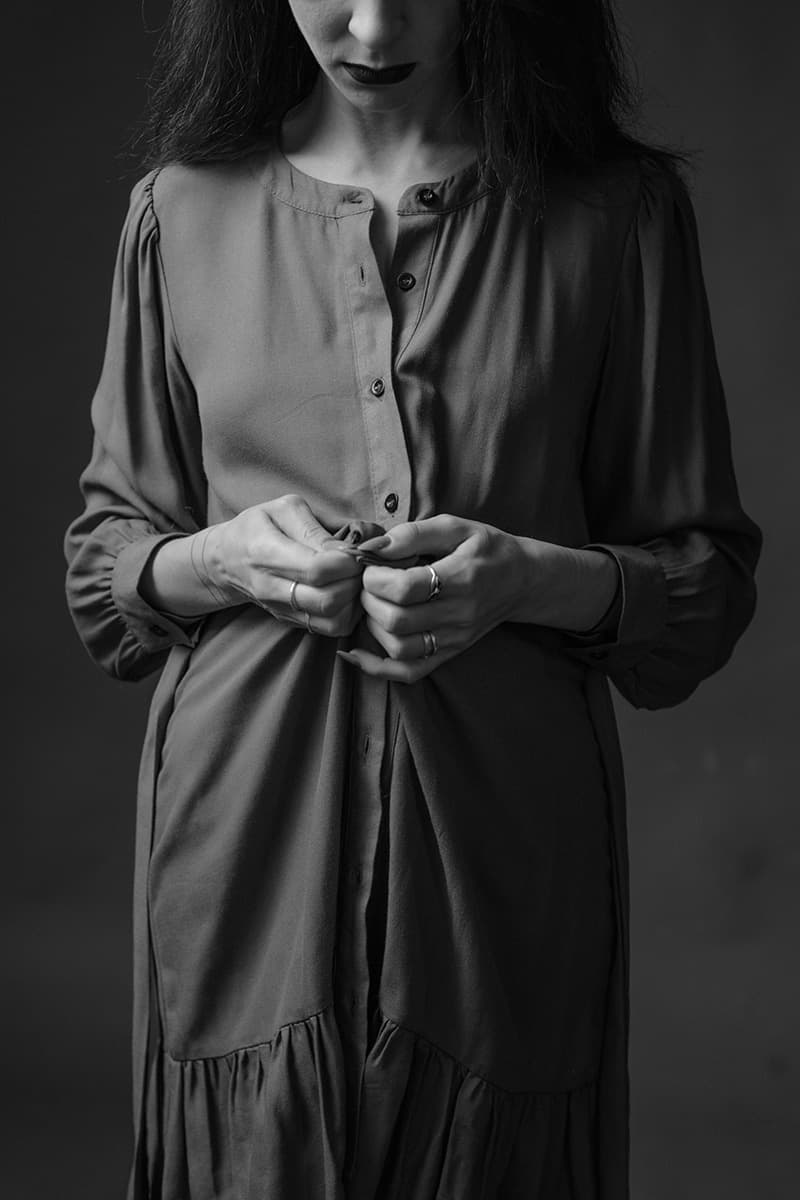
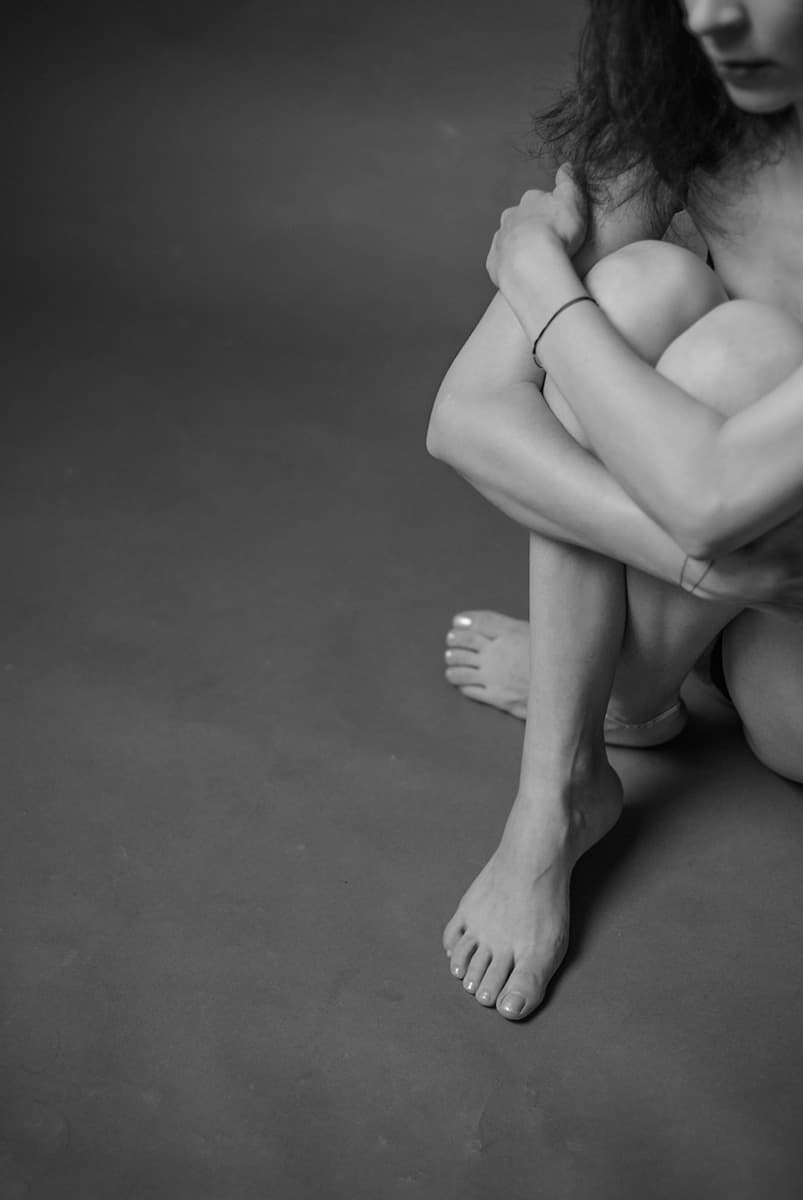
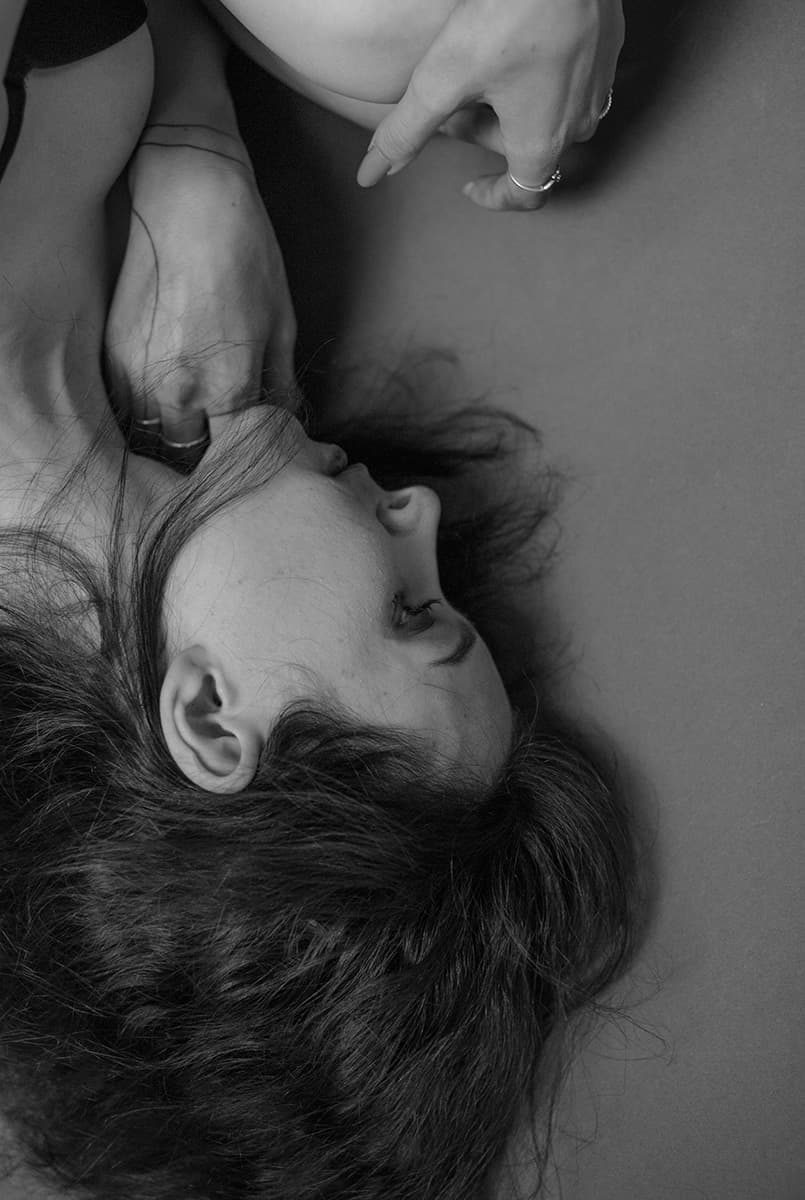
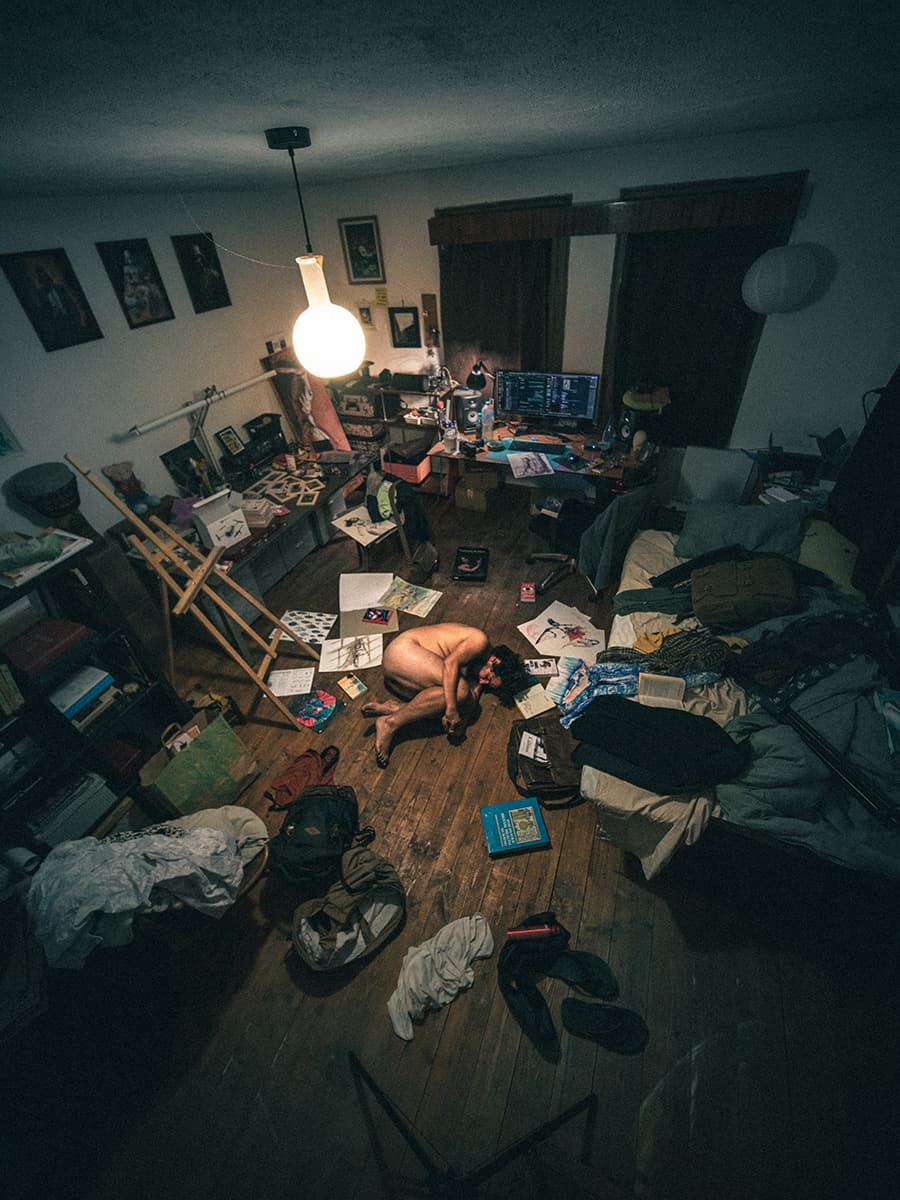
D.E.: It has a working title, Undressed or Getting naked, which means the same thing and is to be understood metaphorically. It came about somewhat accidentally, but as we were saying earlier, there are no accidents. After a very long break - too long! - from artistic creation, a break during which I somehow had to take care of my emotional development, my development in the material world, and provide myself with a certain security and a solid foundation, everything accumulated inside me, as I mentioned above, both consciously and unconsciously. Ideas, emotions, discoveries, images, symbols accumulated, without any output, or at least not enough, as I keep a regular journal, for example, which is also a place to get things out of me. In any case, the need for expression simply came bursting out, HARD. (I have a love-hate relationship with my English...)
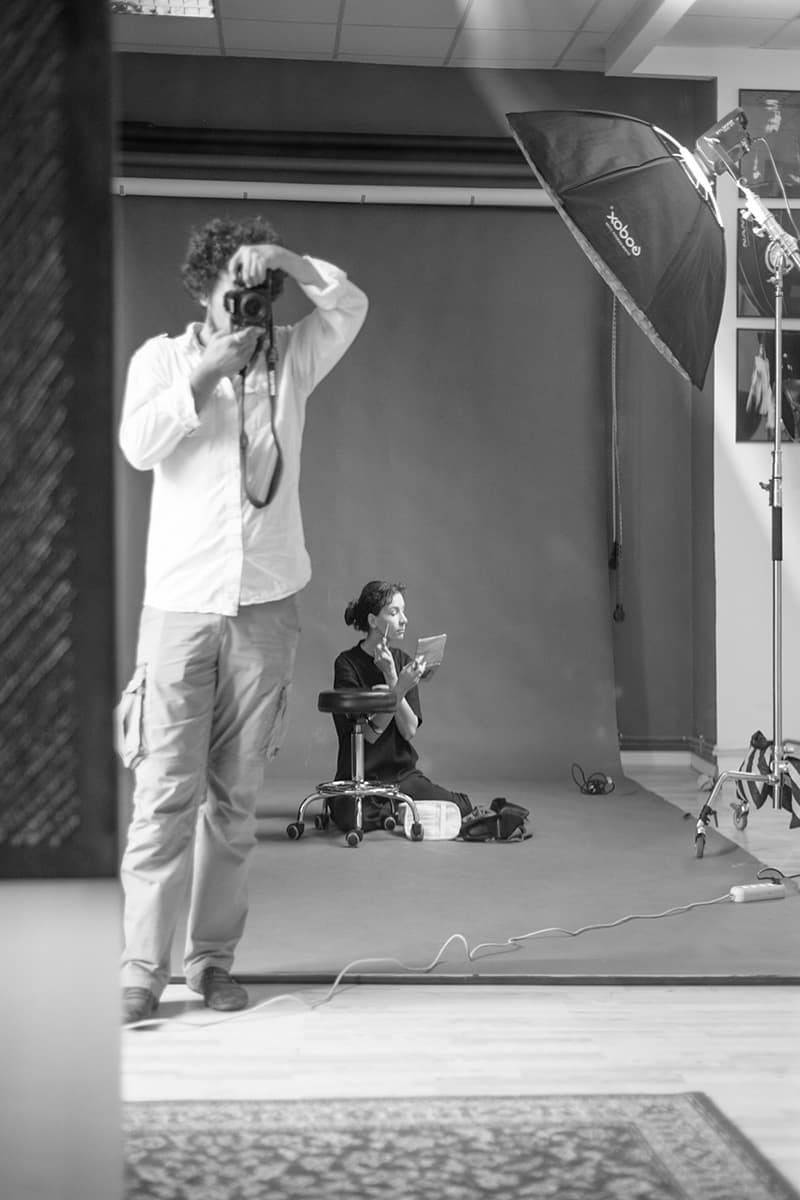
Basically, I wanted to create a portfolio in the commercial area, a kind of ,,Let's show what's beneath the surface” campaign. But I had a very intense, personal, and passionate drive towards this idea. I wrote to a model I knew only tangentially, but I had a feeling she was the right person for this. I don't remember exactly what I wrote to her, but it was the kind of message that in popular culture is called a novel, and her response was commensurate, along the lines of ,,So, for seven years since I've been a model and have always been nothing more than an object, I've been waiting for this message” - needless to say, we've remained good friends ever since. Long story short, I rented a studio, made an appointment, we met, and I started telling her in general terms what I wanted to do, with examples from my own life, moments, experiences, and it just clicked, and an indescribable synergy was created. Three hours passed in a state of flow as if they had never been. We ended up addressing the complexity of human nature, vulnerability, depression, happiness, falseness, and everything that goes on behind social masks. Fashion photography has transformed on its own, shifted towards self-reference, memoir, personal development, shared visual memory. There will be a lot of work to do on this project, but I can't wait to present it to the world. Then, due to circumstances beyond my control, I didn't even get to make the pitch, and when I started going through the images, I remember I was in Bucharest, at some good friends' place, sitting on the couch with my laptop, and I was literally going from one photo to another, and I was blown away, mesmerized. I said, either I'm completely detached from reality, or this shit is gold, and that's when I realized that this was much more than just a portfolio shoot. Two days later, I called you to meet up and show you. This project is a joint project. It's not about me, the genius. From how it was conceived to how it unfolds, it's about togetherness. Maybe the theme isn't necessarily new, but its relevance is. The major problem in today's world is alienation. We are extremely alienated from each other. The phone has come to replace the interlocutor. No one pays attention to you, so you pay attention to yourself. On the surface, it may be beneficial, but the mechanisms behind it are designed to keep you captive. We end up confusing digital validation with real connection. We live in a bubble that inevitably bursts. And the bigger the bubble, the more painful the fall. For me, it's essential that the people I work with believe in themselves more, ignite their spark, and bring out the best in themselves. You asked me why I take photographs... To burn!!! To burn an impression on the retina, I said, because I simply have to. There are some things that, for me, have to happen because that's the way it's been arranged. Is that called fatalism?
M.M.: What strategy or work stages do you have? How can chaos be organized?
D.E.: As I said earlier, until recently I didn't have a structure, at least not a serious and consistent one. The stages were consumption-introspection-outburst, and often not necessarily in that order, totally chaotic and unstructured. On the one hand, I'm sorry, I'm sorry that all the good advice I received from family, mentors, teachers, and friends that talent alone is not enough, that effort is also needed, completely went in one ear and out the other, and in my youthful naivety and arrogance, I superficially pursued that idyllic, romantic image of the chaotic artist who does what he wants, when he wants, who doesn't care, who knows better, whose world is all that matters. But, equally, I got burned, badly burned, with scars, I lost a lot, I caused harm around me... but I learned from it.
Could I have learned faster? Of course. I did, when I realized all these things, and I saw all my shortcomings and everything I lost because of my attitude, and what I did around me, I entered into a frenzy of knowledge, repair, efficiency, and improvement, and I progressed a lot, very quickly. But I didn't know when to stop. My youth and remnants remained, and they had their say, and the more I started to fly higher and faster, I started again to ignore those around me, and even myself, to believe that I knew everything, and inevitably, I fell. Hard. And I thought I would never get up again. I know I have digressed from the subject again, but I would like to take this opportunity to thank my family, both my biological family and my chosen family, for helping me get back up, for being there for me and supporting me. They are my anchors, and I am deeply grateful to them. Thank you!
M.M.: What are the most difficult stages of creation, the project, the concept, the execution, or...? What are your artistic projects so far?
D.E.: For me, hands down, the most difficult is the execution. Projects, concepts, and ideas come to me, and I have more than I can physically cover or do, and that's one of the reasons why execution is difficult, because you have to prioritize, choose, let some go, pay attention. Equally, I still have such childlike enthusiasm and impatience (which I hope to keep, but use wisely), and my mind works very quickly on a project or concept, and what should be done, how I would like it to look, or what process I need to go through to explore a theme, and then I come up against the wonderful reality that speed is exponentially slower than inside my mind. It's a nice paradox that the realization is theoretically the easiest part. Once you have the idea, it's just a process you have to follow. I think that's why I find it difficult; it's simple. As someone dear to me used to say, "The simplest things are the hardest to do." They were absolutely right. But it has improved a lot in recent years, I have cultivated and continue to actively cultivate my patience and remind myself to enjoy the process.
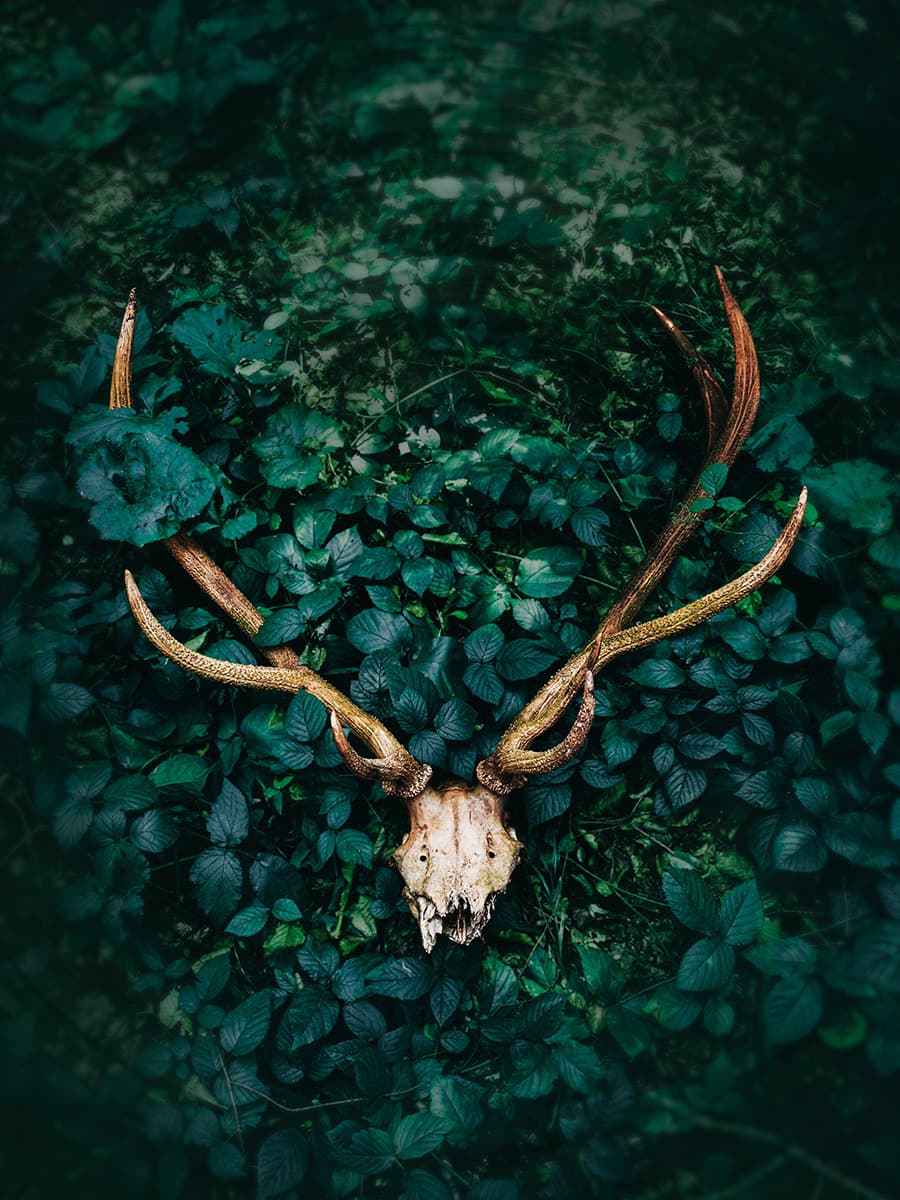
My artistic projects so far have been mostly photographic. I want to get back into painting, with a long list of subjects, ideas, and sketches, but it's not the right time for them yet. Of my photographic projects so far, the most complex would be the one mentioned earlier, Undressed, followed by a few honorable mentions. I won't go into too much detail about each one now, but they would be explorations of nature, which were journeys on several levels, both physical, such as hiking, and inner journeys of self-discovery, culminating in an extremely powerful symbolic image, which is the result of an absolutely extraordinary coincidence.
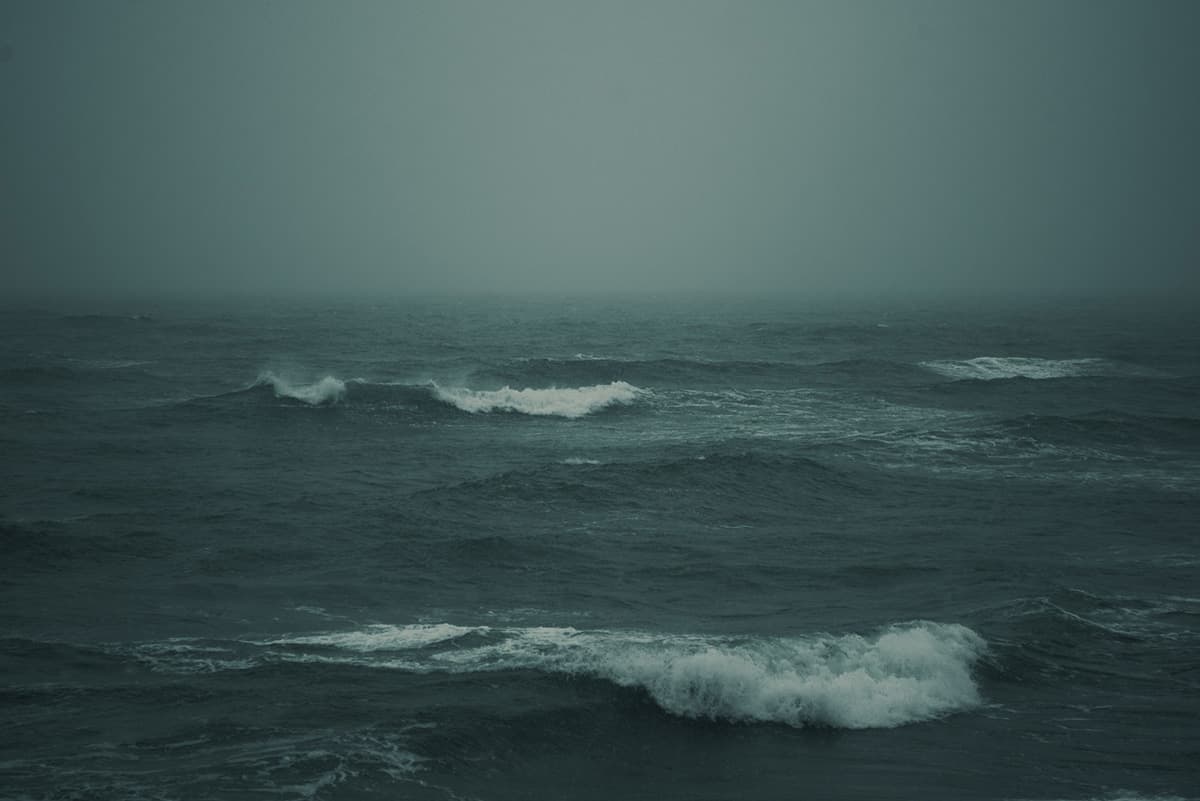
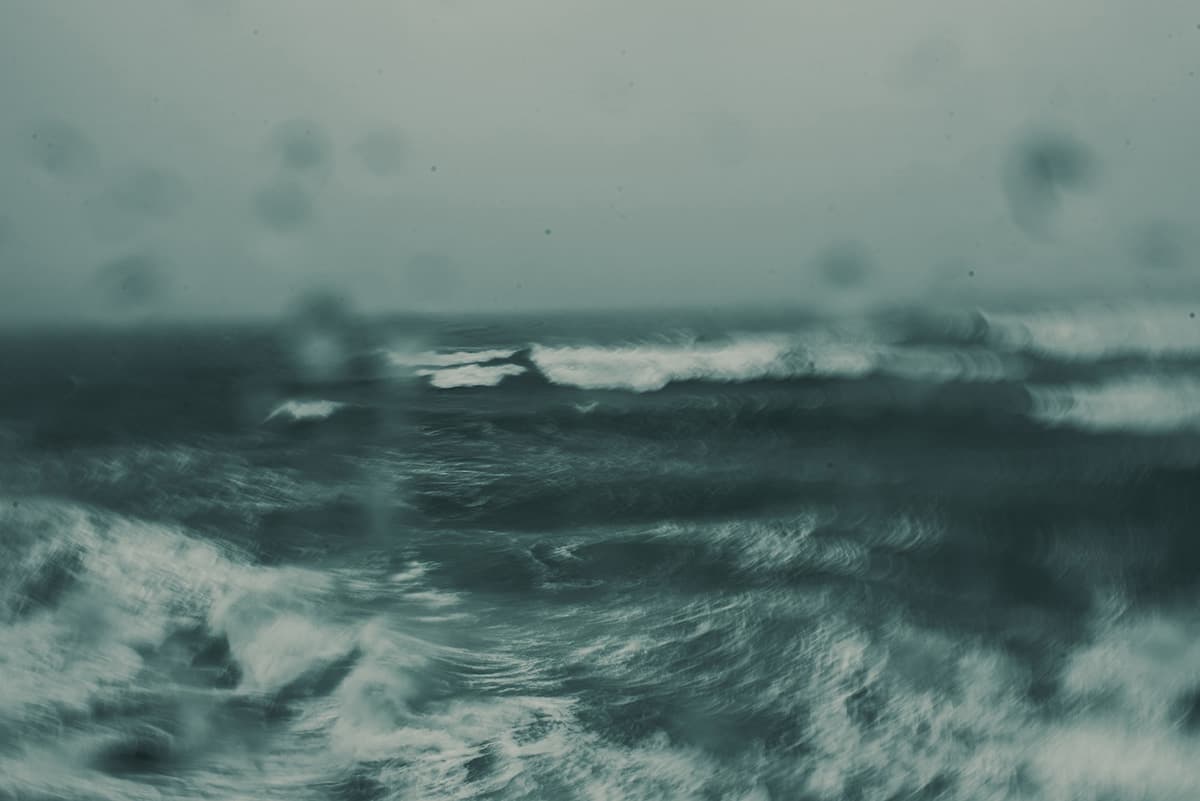
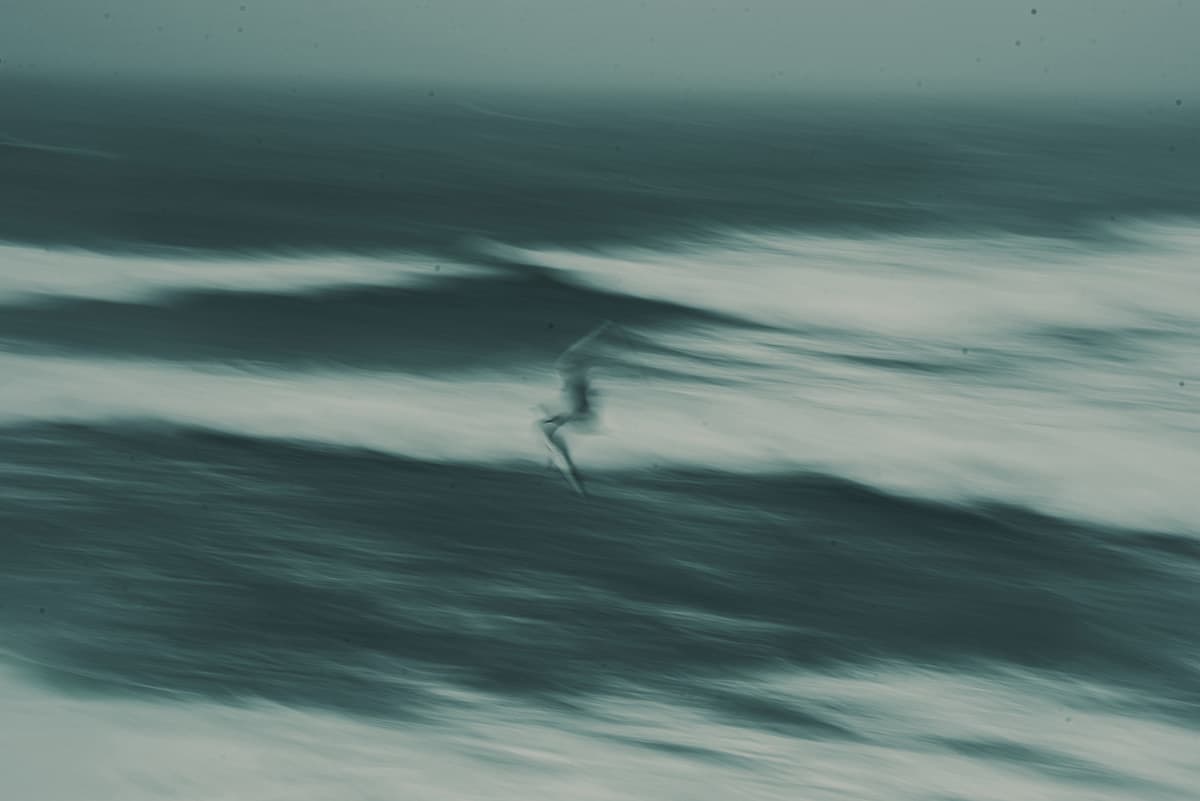
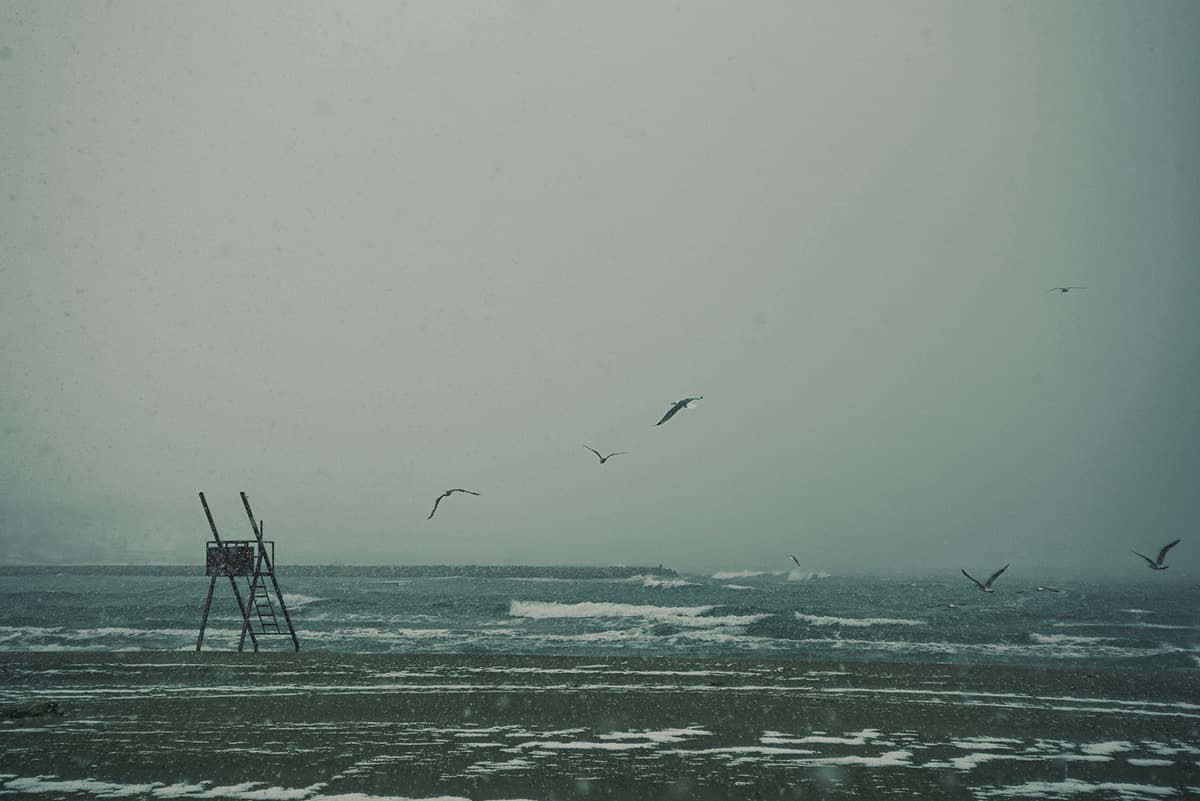
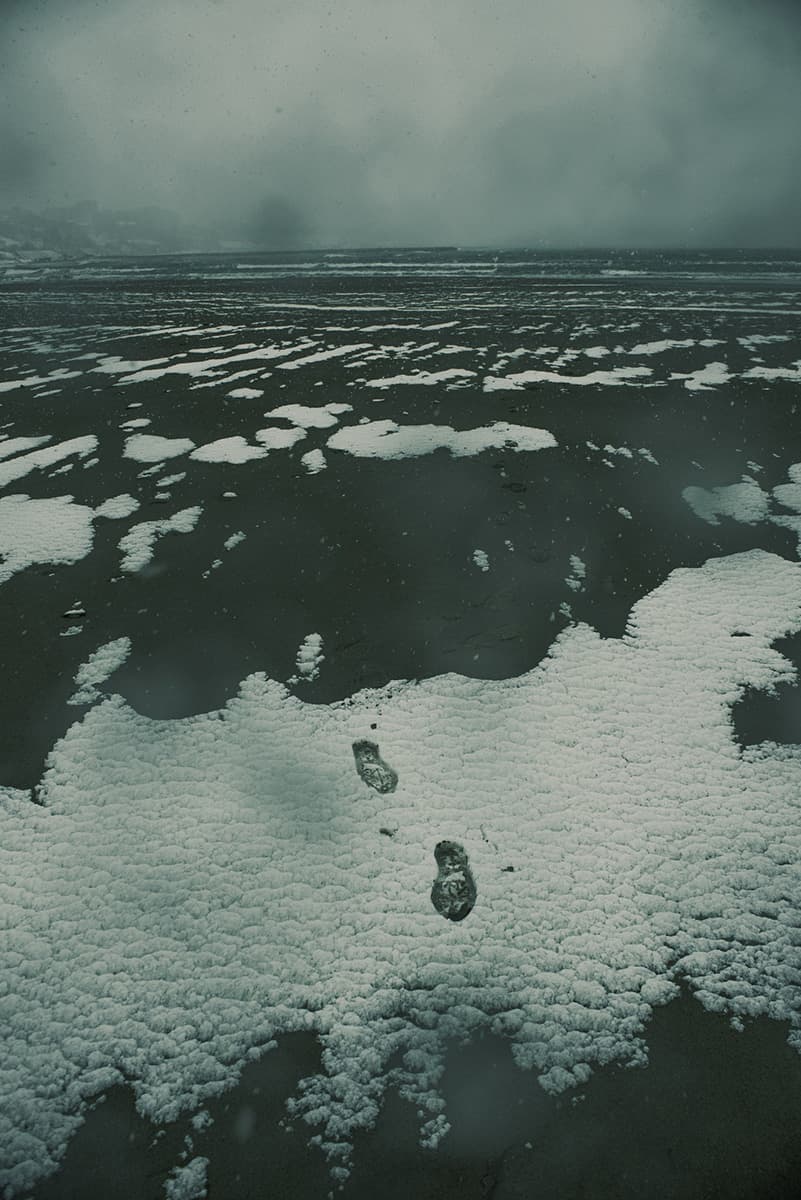
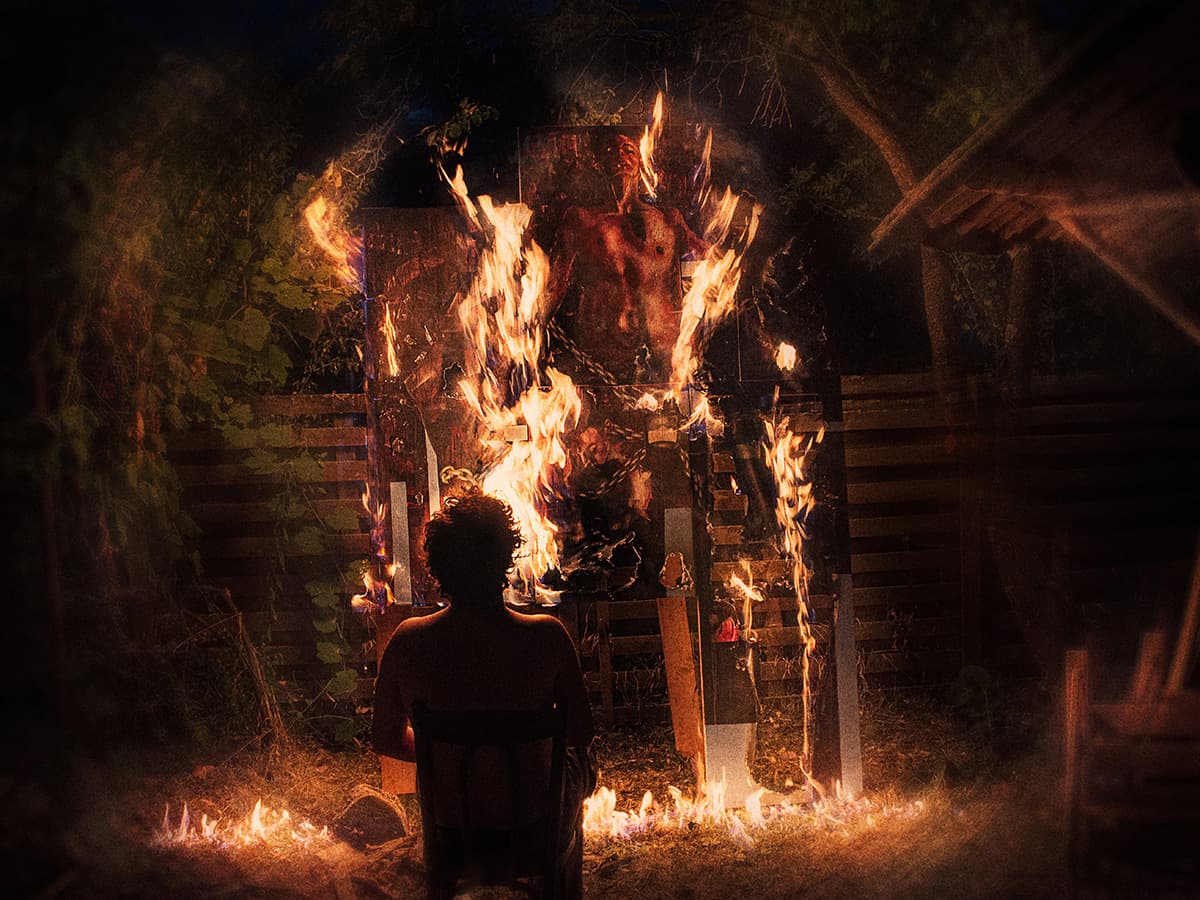
There is also an exploration of the theme of time, which I initially called Memorii Atemporale (Timeless Memories), although I find it sounds a little pretentious. The source of this project is a childhood memory that has stayed with me for years and years, whispering to me that I had to go to the sea in winter, until I finally did, and I have some images that I am really proud of. There is also a series of two images, Death/Rebirth, which represent the burning of the old ego and rebirth as a child ready to absorb the world again. Another documentary project would be the odyssey of my car, Francesca, which has a complicated, dramatic history, but which has also been a nexus of creation, of human connections, a teacher and an important element in my life, hence its status and perhaps even obsessive personification. These would be the main projects, or the more serious/explored in detail ones. Of course, there are many other "sparks" over time, from travels, from play—the series from Vulcanii Noroioși, from trips abroad, my favorites from Naples, where I really had an incredible flow on the street, just with my phone, and many others.
That's pretty much what's worth mentioning so far.
M.M.: Is your studio everywhere, or do you have favorite locations?
D.E.: Do you know the meme with ,,yes”? That's how I'll answer your question. Yes. Although it's false to say yes if I think about it more carefully. Although I'm always curious about where I am, I have to admit that the emotional factor plays an important role in locations. First of all, my favorite location is my own cave. I think any artist would say that. Then, in second place would definitely be nature, with as few people as possible. I know it's contrary to recommendations and norms, but for example, I really enjoy going to the mountains alone. And if it's during the week or in bad weather or cold weather so there are no tourists, bonus points. Then come the locations where I have a certain emotional attachment, conscious or unconscious, or a curiosity or burning desire to explore them. With urban space, for example, I have mixed feelings; it depends a lot on my mood and how open I am at a given moment. It can challenge and inspire me, or it can make me want to teleport myself to a cave five minutes ago, if possible.
In the end, it all starts with me. If I feel safe, the studio is everywhere; if not, I need a space where I feel safe.
M.M.: What do inspiration and intuition mean to you? Do you draw inspiration from other artists?
D.E.: As I said earlier, it's a cycle: consumption - creation - consumption. But I don't usually search for it intentionally. I don't constantly follow anyone. Things come to me by chance, and whatever excites me, I explore further. I've taken bits and pieces from many different directions. I'm more interested in people, their stories, their inner lights and shadows. When I was younger, I copied a lot. That's how you learn. That's how everyone learns. But over time, consumption has become so great that now I'm more interested in playing and discovering without a clear target, but still within certain themes of interest. Authentic things are not born out of rigid intentions, but out of accidents and circumstances. I don't always force things. There are times when I know for sure that I have to stay put, and times when I have to throw myself into something. I've tried many things in life - art projects, business, film, photography - and most of them were, pragmatically speaking, failures. But from them I learned what works and what doesn't. Those miraculous moments of inspiration don't come out of nowhere. They only come if you've accumulated enough experience and skills. Then there's the process: you scribble, you write nonsense, you do something, anything. Sometimes something comes out of it, sometimes it doesn't. And that's okay. There can be no certainty during the process. It comes later. Inspiration too. I have often been struck by inspiration, either because I dreamed about a problem that was bothering me, or because I accidentally discovered the missing piece of a certain puzzle and then everything became clear. But that doesn't happen if you don't have the necessary resources, or if you don't look for them.
I greatly admire artists who can work according to a schedule: they set themselves a clear project, with a number of works, variations, a very well-defined rational structure. I am more intuitive. I do research, but not intentionally. I am curious by nature, I like to know, to observe, and research happens anyway, by default. When inspiration strikes, there is nothing supernatural about it. Connections are created between things that previously seemed separate. Suddenly, "this with that with that" becomes something coherent, meaningful. Once you've accumulated enough, you can function rationally. You have tools, you have structure. But, from my point of view, repeating the same recipe for too long doesn't work for everyone. For some, yes. For me, I don't think it would work in the long run. I don't think there is anything completely original anymore. Context, play, freedom matter. Intuition must be listened to. There are many modern trends that say intuition lies to you, but I believe the exact opposite. Well, it depends on what we're talking about, because ultimately intuition is based on the subconscious processes of our brain, and if you don't know these processes and your own inner workings, or if they contain erroneous or harmful information, then yes, intuition can be massively wrong. In the end, it's all about balance. Intuition works like a compass, but it's good to check the compass from time to time to see if it's taking you in the right direction. Run it through some rational filters.
M.M.: How do you see yourself as an artist in five years?
D.E.: First and foremost, in five years I see myself continuing and remaining consistent with where I am now. Moving forward, given the atypical course of my life, I am now at a bizarre point where, on the one hand, I have matured a lot as a person, but at the same time I have an adolescent drive to create and explore, and in terms of a career as a visual artist, I am totally at the beginning of the road. Where will this intersection lead in five years? I say far. Right now, I am in what I would very bluntly call a "screaming period," with very acute, powerful, visceral, personal, emotional, and difficult themes, but also with a burning desire to assert myself. In five years, I would like to have gone through them, or most of them, to refine myself. At the same time, I would like to resume my academic career, which at the moment I would expect to be both an ego boost and an ego check. Yes, I have big plans. How do I see myself in 5 years? At the very least, I want to be at peace with myself that I have done my part.